
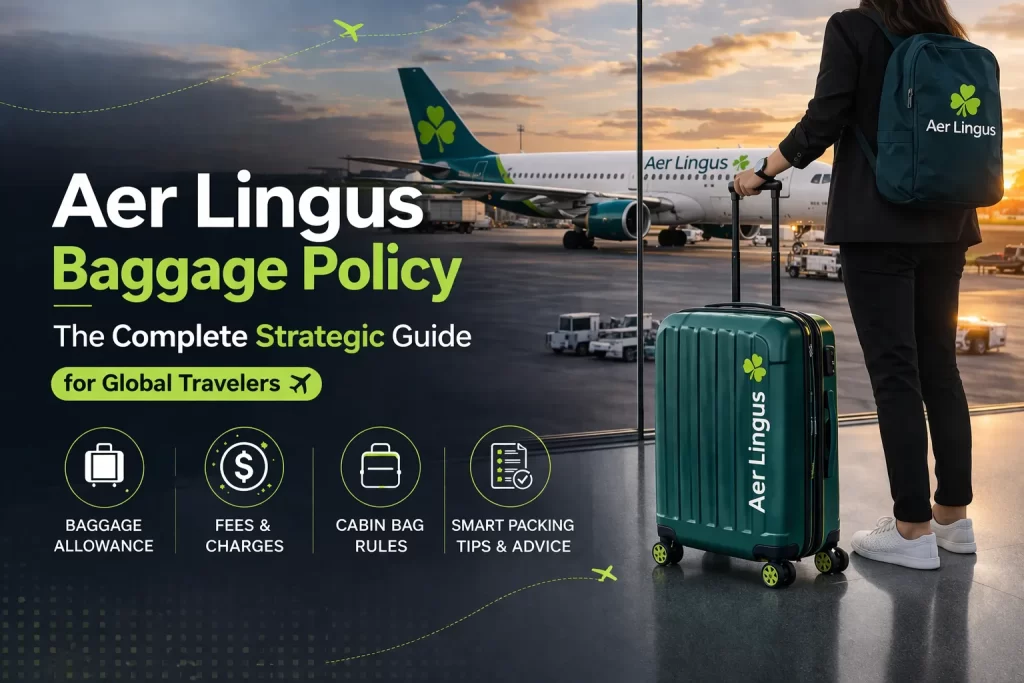
Understanding the Aer Lingus baggage policy is not just about avoiding fees. It is about optimizing your travel strategy, managing costs, and ensuring a seamless airport experience. For U.S. and international travelers, baggage rules can directly influence ticket selection, cabin class decisions, and overall trip efficiency. This guide delivers a deep, aviation-level analysis of Aer Lingus baggage allowance, rules, fees, and strategic insights to help you travel smarter and avoid costly mistakes.
Understanding Aer Lingus Baggage Policy Structure
Aer Lingus operates a hybrid baggage framework that blends elements of low-cost carrier efficiency with full-service airline flexibility. This means baggage is not always included in base fares, especially on transatlantic Saver tickets. Travelers must understand how fare type, route, and cabin class determine baggage entitlement.
The airline segments baggage into three major categories. These include cabin baggage, checked baggage, and special or excess baggage. Each category has distinct rules, pricing structures, and operational constraints that influence traveler decisions across booking, check-in, and boarding stages.
Aer Lingus Carry On Allowance and Cabin Baggage Rules
Aer Lingus carry on allowance is designed to balance passenger convenience with operational efficiency. For most economy travelers, the standard allowance includes one small personal item. Larger cabin bags are often restricted to priority or higher fare classes, which creates a strategic decision point for travelers.
The airline enforces strict cabin bag size and weight limitations. Typically, a 10 kg cabin bag is permitted only under certain fare types such as Advantage or AerSpace. Basic fares often restrict passengers to a smaller under-seat item, which aligns Aer Lingus with European low-cost carrier trends.
This approach allows the airline to streamline boarding and reduce turnaround time at busy airports such as Dublin and Heathrow. For travelers, the implication is clear. Choosing the wrong fare can result in unexpected gate-check fees or forced baggage upgrades.
Aer Lingus Cabin Bag Size and Weight Limits
Cabin baggage rules are highly specific and strictly enforced. The standard dimensions for a carry-on bag are approximately 55 cm x 40 cm x 24 cm. Weight is typically capped at 10 kg for eligible fares. Personal items such as laptop bags or handbags must fit under the seat.
From an operational standpoint, these limits are tied to aircraft storage capacity and safety regulations. Aer Lingus operates a mixed fleet including Airbus A320 family aircraft and long-haul A330 jets, each with different overhead bin configurations.
For travelers, understanding these constraints is essential. Oversized or overweight cabin baggage often leads to last-minute fees, which are significantly higher at the airport than online. This is where strategic planning becomes critical.
Aer Lingus Checked Baggage Allowance Explained
Aer Lingus checked baggage allowance varies significantly depending on fare type and route. On transatlantic flights, Saver fares usually exclude checked baggage, while Smart and Flex fares include at least one checked bag.
The standard checked bag weight limit is 23 kg per bag. Premium cabin passengers may receive higher allowances, sometimes up to 32 kg per bag. The number of bags allowed also increases with fare class.
This tiered structure reflects revenue optimization strategies used across the airline industry. By unbundling baggage from base fares, Aer Lingus can offer competitive ticket prices while generating ancillary revenue through baggage fees.
Aer Lingus Checked Bag Weight and Size Limits
The standard Aer Lingus checked bag weight limit is 23 kg, with maximum dimensions typically not exceeding 158 cm when combining length, width, and height. Exceeding these limits triggers additional fees or reclassification as oversized baggage.
Weight restrictions are driven by aircraft loading constraints and ground handling safety protocols. Heavier bags increase operational risk and handling time, which directly impacts airline efficiency.
For travelers, exceeding weight limits can be costly. Aer Lingus excess baggage charges are often significantly higher at the airport compared to pre-purchased allowances online. This creates a clear incentive for early planning and accurate packing.
Aer Lingus Baggage Limits for International Flights
Aer Lingus baggage limits for international routes, particularly between the United States and Europe, are structured differently than short-haul European flights. Long-haul passengers generally receive more generous allowances, especially in higher fare classes.
However, basic economy travelers on international routes often face strict limitations. This includes no included checked baggage and restricted cabin baggage allowances. These limitations are designed to compete with both legacy carriers and low-cost transatlantic airlines.
From a strategic perspective, travelers must evaluate whether upgrading to a higher fare class is more cost-effective than paying for baggage separately. In many cases, bundled fares provide better overall value.
Aer Lingus Baggage Restrictions and Prohibited Items
Aer Lingus baggage restrictions align with international aviation safety standards set by organizations such as IATA and ICAO. Prohibited items include flammable materials, certain batteries, and hazardous chemicals.
Lithium battery regulations are particularly important. Devices containing such batteries must often be carried in cabin baggage rather than checked luggage. Failure to comply can result in confiscation or delays.
Understanding these restrictions is not just about compliance. It also reduces the risk of baggage delays, security issues, and denied boarding scenarios. For frequent travelers, this knowledge becomes a critical part of efficient travel planning.
How Many Bags Does Aer Lingus Allow
The number of bags Aer Lingus allows depends on fare type, route, and cabin class. Economy Saver fares may include zero checked bags, while Flex and Business fares include one or more.
Cabin baggage allowances also vary. Some passengers are limited to a single personal item, while others can bring both a carry-on bag and a personal item. This variability reflects a broader industry trend toward fare customization.
Travelers must carefully review their ticket details before departure. Misunderstanding baggage entitlements is one of the most common causes of unexpected travel expenses.
What Is Aer Lingus Baggage Weight Limit
The Aer Lingus baggage weight limit is a critical factor in travel planning. For checked baggage, the standard limit is 23 kg per bag. For cabin baggage, the limit is generally 10 kg, depending on fare eligibility.
These limits are not arbitrary. They are based on aircraft performance, fuel efficiency, and safety considerations. Overweight baggage increases fuel consumption and affects aircraft balance.
For travelers, this means that efficient packing is not just a convenience but a cost-saving strategy. Investing in lightweight luggage and using packing techniques can significantly reduce the risk of excess baggage charges.
Aer Lingus Baggage Fees Structure and Pricing Logic
Aer Lingus baggage fees are structured using a dynamic pricing model that varies by route, season, and booking stage. This pricing strategy reflects a broader airline industry shift toward ancillary revenue optimization. Travelers who understand this model can significantly reduce costs by timing their baggage purchases correctly.
Fees are typically lowest when purchased during the booking process. Prices increase during online check-in and rise further at the airport. This tiered pricing structure incentivizes early commitment and reduces operational friction at departure points.
Aer Lingus Checked Baggage Fees for International Flights
For transatlantic routes between the United States and Europe, Aer Lingus baggage fees can vary widely depending on fare type. Saver fares often require travelers to pay separately for checked baggage, while Smart or Flex fares include at least one checked bag.
Typical fees for a first checked bag can range from moderate to high depending on when it is purchased. Adding baggage online is significantly cheaper than paying at the airport. This is a critical insight for cost-conscious travelers.
From an airline revenue perspective, this approach allows Aer Lingus to compete on base ticket pricing while monetizing additional services. For travelers, it introduces a decision framework where total trip cost must be evaluated holistically rather than focusing solely on airfare.
Aer Lingus Excess Baggage Charges Explained
Aer Lingus excess baggage charges apply when passengers exceed either the weight or number of allowed bags. These charges are among the highest ancillary fees and are designed to discourage overpacking.
Overweight baggage, typically above 23 kg but below 32 kg, incurs per-kilogram charges. Bags exceeding 32 kg are generally not accepted and must be repacked. Additional bags beyond the included allowance are charged per item.
This pricing structure reflects operational realities. Heavier and additional bags increase fuel consumption, loading time, and handling complexity. For travelers, the implication is clear. Managing weight and bag count is essential to controlling travel costs.
How Much Does Aer Lingus Charge for Extra Baggage
The cost of extra baggage depends on several variables including route, timing, and availability. On transatlantic flights, adding an extra checked bag can be significantly more expensive at the airport compared to pre-purchasing online.
Online purchases typically offer discounted rates that can save travelers a substantial amount per bag. At the airport, fees are often standardized at higher levels to discourage last-minute changes.
From a strategic standpoint, travelers should treat baggage as part of their booking decision rather than an afterthought. Comparing fare bundles that include baggage versus adding bags separately often reveals cost efficiencies.
Aer Lingus Baggage Fees vs Fare Class Value Analysis
One of the most overlooked aspects of the Aer Lingus luggage policy is how baggage fees interact with fare classes. Saver fares may appear cheaper initially but often become more expensive once baggage is added.
Smart fares typically include checked baggage and sometimes seat selection, making them a better value for travelers who require luggage. Flex fares provide even greater benefits, including flexibility and priority services.
This creates a classic airline pricing paradox. The lowest advertised fare is not always the cheapest total cost. Experienced travelers evaluate total trip economics, including baggage, seat selection, and flexibility, before making a decision.
Add Extra Baggage Aer Lingus: Timing and Strategy
Adding extra baggage on Aer Lingus can be done during booking, through the “Manage Trip” portal, or at the airport. The timing of this decision has a direct financial impact.
Purchasing baggage online after booking but before check-in usually offers the best balance between flexibility and cost. Waiting until airport check-in results in the highest fees and limited options.
Strategically, travelers should assess their baggage needs as early as possible. Business travelers often benefit from bundled fares, while leisure travelers can optimize costs by purchasing only what they need in advance.
Buy Baggage Aer Lingus Online vs Airport Purchase
Buying baggage online is one of the most effective ways to reduce travel costs. Aer Lingus offers discounted rates for advance purchases, which can be accessed through their digital booking management system.
Airport purchases are intentionally priced higher to encourage pre-planning. This reduces congestion at check-in counters and improves operational efficiency for the airline.
For travelers, the difference in cost can be substantial. In many cases, buying baggage online can save up to 50 percent compared to airport rates. This makes digital pre-planning an essential part of modern travel strategy.
Aer Lingus Carry On Baggage Allowance Optimization
Maximizing the Aer Lingus carry on baggage allowance is a key strategy for avoiding checked baggage fees. Travelers who pack efficiently can often eliminate the need for checked bags entirely.
This involves selecting lightweight luggage, using compression packing techniques, and prioritizing essential items. Business travelers often leverage this approach to reduce airport wait times and improve travel efficiency.
However, strict enforcement of cabin baggage rules means that travelers must adhere to size and weight limits. Overpacking a cabin bag can result in forced gate checking and additional fees.
Aer Lingus Cabin Baggage Rules and Priority Boarding
Aer Lingus cabin baggage rules are closely tied to boarding priority. Passengers with priority boarding or higher fare classes are more likely to secure overhead bin space for their carry-on bags.
Non-priority passengers may be required to check larger cabin bags at the gate if overhead space is limited. This is a common practice across European carriers and reflects the realities of high passenger loads.
For travelers, purchasing priority boarding can be a strategic decision. It not only improves boarding experience but also ensures that cabin baggage remains accessible throughout the flight.
Aer Lingus Baggage Allowance for Frequent Travelers
Frequent travelers, particularly those enrolled in loyalty programs, often receive enhanced baggage allowances. While Aer Lingus operates its own loyalty framework, benefits may also extend through partnerships with global airline alliances.
These benefits can include additional checked bags, increased weight limits, and priority handling. For business travelers, these perks significantly improve travel efficiency and reduce costs over time.
Understanding how loyalty status impacts baggage allowance is a key component of long-term travel strategy. It allows frequent flyers to optimize both cost and convenience across multiple trips.
Aer Lingus Baggage Policy Trends and Industry Comparison
Aer Lingus baggage policy reflects broader trends in the global airline industry. These include unbundled pricing, dynamic fee structures, and increased reliance on ancillary revenue.
Compared to major U.S. carriers, Aer Lingus offers competitive baggage pricing but stricter cabin baggage rules on lower fares. Compared to European low-cost carriers, it provides more flexibility and better long-haul allowances.
This positioning allows Aer Lingus to compete across multiple market segments. For travelers, it means that understanding the airline’s hybrid model is essential to making informed decisions.
Strategic Packing Techniques to Avoid Aer Lingus Excess Fees
Avoiding excess baggage charges requires more than just weighing your suitcase. It involves strategic packing techniques that align with airline policies and operational realities.
Travelers should use digital luggage scales, distribute weight evenly across bags, and prioritize versatile clothing. Packing cubes and compression bags can significantly increase capacity without exceeding weight limits.
From an aviation strategy perspective, efficient packing reduces not only costs but also travel friction. It minimizes the risk of delays, repacking at the airport, and unexpected fees.
Lost Baggage Aer Lingus Claim Process and Passenger Rights
Lost baggage is one of the most critical stress points in air travel, and the Aer Lingus baggage policy includes structured procedures to manage such incidents. Passengers must report missing baggage immediately at the airport before leaving the arrivals area. A Property Irregularity Report is generated, which becomes the foundation of the claim process.
From an industry standpoint, airlines like Aer Lingus operate within international frameworks such as the Montreal Convention, which governs compensation limits and liability. Travelers who understand this framework are better positioned to recover losses efficiently and avoid procedural delays.
Aer Lingus Delayed Baggage Compensation Framework
Delayed baggage is more common than permanent loss, especially on connecting international flights. Aer Lingus provides compensation for essential items purchased while baggage is delayed, but claims must be supported with receipts and filed within specific timelines.
The compensation process is not automatic. Travelers must actively submit documentation through the airline’s claims portal. Reimbursement typically covers reasonable expenses such as clothing and toiletries, aligned with industry norms.
From a strategic perspective, experienced travelers often carry essential items in their cabin baggage to mitigate disruption. This approach reduces dependency on compensation processes and ensures continuity during travel.
Aer Lingus Baggage Restrictions for Special and High-Risk Items
Aer Lingus baggage restrictions extend beyond standard prohibited items to include special handling categories such as sports equipment, musical instruments, and medical devices. These items often require pre-approval and may incur additional fees.
Lithium batteries remain one of the most tightly regulated categories. Devices containing these batteries must generally be carried in cabin baggage due to fire risk. This aligns with global aviation safety protocols.
For travelers, the key insight is preparation. Declaring special items in advance and understanding handling requirements can prevent last-minute complications and ensure compliance with airline policies.
Aer Lingus Restricted Items Baggage Policy in Practice
Restricted items policies are not just regulatory checklists. They directly impact security clearance, boarding timelines, and baggage acceptance. Items such as sharp objects, flammable liquids, and certain tools are either prohibited or restricted depending on whether they are packed in cabin or checked baggage.
Security screening processes at international airports are increasingly stringent. Non-compliance can lead to confiscation, delays, or even denied boarding in extreme cases. This is particularly relevant for U.S. travelers subject to TSA regulations in addition to airline policies.
Understanding how Aer Lingus integrates international security standards into its baggage rules allows travelers to move through checkpoints more efficiently and avoid unnecessary disruptions.
Aer Lingus Baggage Limits International: Operational Insights
Aer Lingus baggage limits for international flights are influenced by aircraft type, route demand, and airport infrastructure. Long-haul aircraft such as the Airbus A330 have greater cargo capacity, allowing for more generous baggage allowances compared to short-haul aircraft.
However, high-demand routes can lead to stricter enforcement of baggage limits due to capacity constraints. Seasonal travel peaks, such as summer transatlantic routes, often see increased scrutiny of both cabin and checked baggage.
For travelers, this means that compliance becomes even more critical during peak travel periods. Planning ahead and adhering strictly to baggage limits reduces the risk of last-minute complications.
Does Aer Lingus Include Checked Baggage in All Fares
Aer Lingus does not include checked baggage in all fares, particularly on lower-tier economy tickets. This reflects a broader industry shift toward unbundled pricing models that allow airlines to offer lower base fares while charging separately for additional services.
Higher fare classes, such as Smart, Flex, and Business, typically include checked baggage as part of the ticket. These fares are designed to provide greater convenience and predictability for travelers who require luggage.
From a strategic perspective, travelers must evaluate whether a higher fare with included baggage offers better value than a lower fare with added fees. This decision often depends on trip duration, purpose, and packing requirements.
Aer Lingus Checked Bag Weight Limit in Real-World Scenarios
The Aer Lingus checked bag weight limit of 23 kg is a standard benchmark, but real-world scenarios often test this limit. Travelers returning from extended trips or carrying business materials frequently approach or exceed this threshold.
When bags exceed the limit, passengers must either pay excess baggage charges or redistribute weight across multiple bags. This can create logistical challenges at the airport, especially during peak travel times.
Experienced travelers mitigate this risk by weighing bags before departure and leaving a margin for additional items acquired during the trip. This proactive approach reduces stress and avoids unexpected fees.
Aer Lingus Baggage Rules for Connecting Flights
Connecting flights introduce additional complexity into baggage management. When traveling across multiple airlines or codeshare partners, baggage rules may vary depending on the operating carrier.
Aer Lingus typically applies its own baggage policy on flights it operates, but partner airlines may have different allowances and fee structures. This can create confusion, particularly for international itineraries involving multiple carriers.
Travelers should verify baggage rules for each segment of their journey. Understanding which airline’s policy applies can prevent disputes at check-in and ensure a smoother travel experience.
Aer Lingus Luggage Policy for Business and Premium Travelers
Premium travelers experience a significantly enhanced version of the Aer Lingus luggage policy. Business class passengers typically receive higher checked baggage allowances, increased weight limits, and priority handling services.
These benefits are not merely conveniences. They are designed to support the needs of business travelers who often carry additional materials and require efficient airport processing.
Priority baggage handling reduces wait times at arrival, while increased allowances provide flexibility. For frequent international travelers, these advantages can justify the higher ticket cost.
Aer Lingus Baggage Fees International Flights: Strategic Outlook
Baggage fees on international flights are a key component of airline revenue strategies. Aer Lingus uses these fees to balance competitive pricing with operational sustainability.
Looking ahead, the trend toward personalized pricing is likely to continue. Airlines are increasingly using data analytics to tailor baggage fees based on traveler behavior, route demand, and booking patterns.
For travelers, this means that baggage pricing may become more dynamic and less predictable. Staying informed and booking early will remain essential strategies for minimizing costs.
Aer Lingus Delayed and Damaged Baggage Claims Best Practices
Filing claims for delayed or damaged baggage requires attention to detail and adherence to strict timelines. Passengers must report damage before leaving the airport and submit supporting documentation promptly.
Photographic evidence, receipts, and detailed descriptions improve the likelihood of successful claims. Airlines assess claims based on international liability standards, which may limit compensation amounts.
From a strategic standpoint, documenting baggage condition before travel can strengthen claims. This level of preparation is common among frequent travelers and reduces disputes during the claims process.
Smart Ways to Use Aer Lingus Baggage Policy
Consider a traveler flying from New York to Dublin on a Saver fare. Without planning, they may pay for checked baggage at the airport, incur excess weight fees, and face restrictions on cabin baggage.
A strategic approach would involve upgrading to a Smart fare, purchasing baggage online, and optimizing cabin packing. This reduces total cost, improves convenience, and minimizes airport stress.
This scenario illustrates a broader principle. The Aer Lingus baggage policy is not just a set of rules but a system that rewards informed decision-making. Travelers who understand this system can significantly enhance their travel experience while controlling costs.
Final Thoughts on Aer Lingus Baggage Policy
Navigating the aer lingus baggage policy becomes much easier when you understand how fares, allowances, and fees work together. Ticket Business Class is an independent travel agency that helps travelers make smarter booking decisions while avoiding unnecessary baggage costs. Whether you are planning a short trip or a long-haul journey, having the right guidance can simplify the process. If you would like assistance with baggage rules, fare selection, or trip planning, the team at Ticket Business Class can help. You can also speak with an expert by calling +1-877-243-8320 for personalized support tailored to your travel needs and preferences.
Frequently Asked Questions (FAQs)
1. What is the Aer Lingus baggage policy for international flights?
The Aer Lingus baggage policy for international flights depends on fare type and cabin class. Saver fares often exclude checked baggage, while Smart and Flex fares typically include at least one bag. Cabin baggage allowances also vary, with stricter limits on lower fares. Understanding your ticket inclusions before traveling helps avoid unexpected fees and ensures smoother airport processing.
2. Does Aer Lingus include checked baggage in economy fares?
Checked baggage is not always included in economy fares. Saver fares usually require passengers to purchase baggage separately, while higher-tier fares like Smart include at least one checked bag. Travelers should compare total costs, including baggage fees, before booking. In many cases, upgrading to a fare that includes baggage can be more cost-effective than adding it later.
3. What is the Aer Lingus checked bag weight limit?
The standard Aer Lingus checked bag weight limit is 23 kg per bag for most economy fares. Premium cabins may allow higher limits, sometimes up to 32 kg. Bags exceeding the limit incur additional fees or must be repacked. Weighing luggage in advance and leaving some margin for return trips can help avoid excess baggage charges.
4. How much does Aer Lingus charge for extra baggage?
Aer Lingus extra baggage charges vary based on route and timing. Purchasing additional bags online during booking or through the manage trip section is usually cheaper than paying at the airport. Airport fees are typically higher and fixed. Planning ahead and adding baggage early can significantly reduce overall travel costs.
5. What is the Aer Lingus carry on baggage allowance?
Aer Lingus carry on allowance depends on fare type. Basic fares usually include only a small personal item, while higher fares allow a cabin bag up to 10 kg. Size restrictions also apply and are strictly enforced. Travelers should check their ticket details carefully to ensure compliance and avoid last-minute gate fees.
6. Can I buy Aer Lingus baggage online after booking?
Yes, passengers can buy baggage online after booking through the airline’s manage trip portal. This option allows travelers to add checked bags at a lower cost compared to airport rates. It also provides flexibility if travel plans change. Purchasing in advance is recommended to secure better pricing and reduce airport delays.
7. What happens if my baggage is overweight on Aer Lingus?
If your baggage exceeds the 23 kg limit, Aer Lingus applies excess baggage charges based on weight. Bags over 32 kg are generally not accepted. Passengers may need to redistribute items or purchase additional baggage allowance. Using a luggage scale before heading to the airport helps prevent unexpected fees and check-in delays.
8. How many bags does Aer Lingus allow per passenger?
The number of bags allowed depends on fare type and cabin class. Saver fares may not include any checked baggage, while higher fares include one or more bags. Cabin baggage allowances also vary. Reviewing your ticket details before travel ensures you understand your entitlements and can plan accordingly.
9. What should I do if Aer Lingus loses my baggage?
If your baggage is lost, report it immediately at the airport and file a Property Irregularity Report. This initiates the tracking and recovery process. Keep all travel documents and receipts for essential purchases, as you may be eligible for compensation under international regulations. Prompt reporting improves the chances of quick resolution.
10. Are there restricted items in Aer Lingus baggage?
Yes, Aer Lingus follows international aviation safety rules regarding restricted items. Prohibited items include flammable materials, certain batteries, and hazardous goods. Lithium batteries must usually be carried in cabin baggage. Checking the airline’s guidelines before packing ensures compliance and helps avoid delays or confiscation during security screening.