

Air travel has evolved into a data-driven, highly dynamic ecosystem where pricing, availability, and traveler experience are shaped by algorithms, demand signals, and airline strategy. Navigating air canada booking effectively requires more than simply selecting dates and destinations. It demands an understanding of fare structures, booking channels, timing strategies, and policy frameworks. This guide delivers a comprehensive, expert-level breakdown designed for USA and international travelers who want to optimize cost, flexibility, and overall travel value when booking with Air Canada.
Understanding the Air Canada Booking Ecosystem
Air Canada operates within a hybrid revenue model that blends legacy airline sophistication with modern retailing strategies. This section explains how its booking infrastructure works, including distribution systems, fare segmentation, and global partnerships. Understanding this ecosystem allows travelers to make smarter booking decisions, especially when dealing with international airline reservations and dynamic pricing environments.
At its core, Air Canada distributes tickets through three primary channels:
- Direct booking via its website and mobile app
- Global Distribution Systems used by travel agencies
- Online travel aggregators and third-party platforms
Each channel has pricing nuances. For example, air canada online booking often includes exclusive fare classes and promotional bundles not visible elsewhere. Conversely, third-party platforms may bundle fares differently, affecting refund eligibility or seat selection rights.
Air Canada is also a founding member of the Star Alliance, which expands its reach globally. This means that air canada international booking may involve partner airlines, impacting baggage rules, seat assignments, and upgrade eligibility.
From a strategist’s perspective, the airline uses advanced revenue management systems that adjust fares based on demand curves, booking windows, and route profitability. This is why air canada flight deals can fluctuate significantly within hours.
How to Book Air Canada Flights Online Step by Step
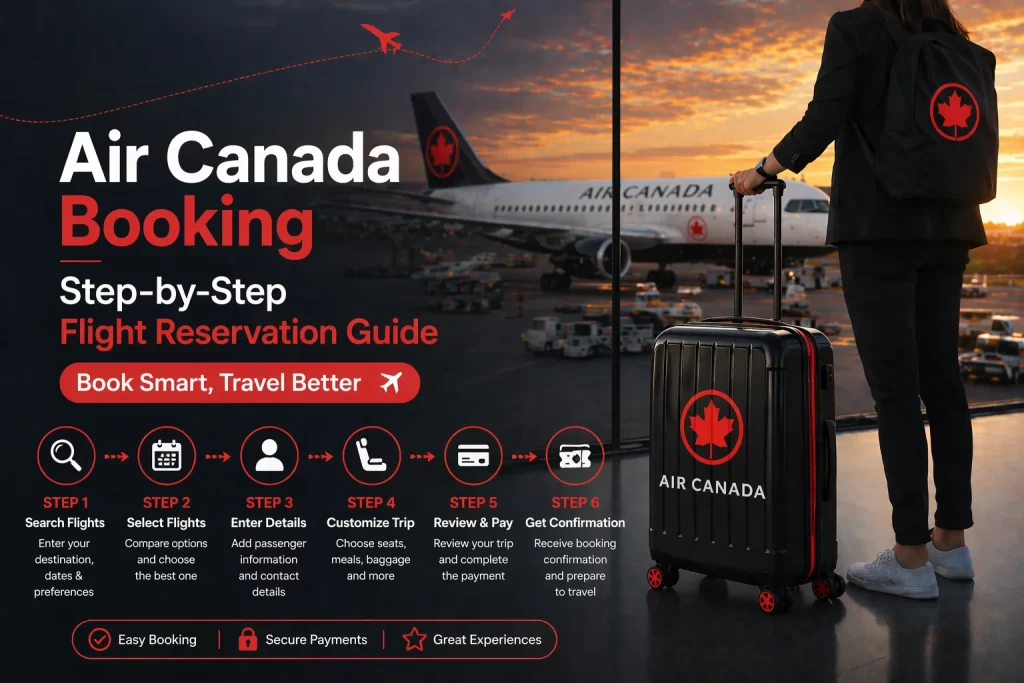
Booking a flight today is not just transactional. It is an optimization exercise. This section provides a structured, step-by-step process for air canada flight booking, incorporating best practices used by frequent travelers and industry professionals to secure optimal fares and conditions.
Step 1: Search with Flexible Parameters
Start by entering origin, destination, and dates. For air canada flights from USA, flexibility in departure days can reduce fares significantly. Midweek departures often yield lower prices due to reduced business demand.
Step 2: Compare Fare Families
Air Canada offers multiple fare types:
- Basic Economy
- Standard Economy
- Flex
- Comfort
- Business Class
Each tier impacts refundability, baggage, and seat selection fees. Choosing the cheapest fare may result in higher total cost if add-ons are required.
Step 3: Evaluate Flight Timing and Connections
Nonstop flights are convenient but often priced higher. Strategic layovers can unlock air canada cheap flights, especially on transborder routes.
Step 4: Review Add-ons Before Checkout
During air canada reservations, the airline upsells:
- Seat selection
- Priority boarding
- Extra baggage
- Travel insurance
Understanding these costs upfront avoids surprises later.
Step 5: Finalize Payment and Confirmation
After payment, you receive a booking reference. This is essential for air canada manage booking, where you can modify or upgrade your itinerary.
Air Canada Fare Types: Economy vs Business Class Strategy
Choosing between fare classes is not simply about comfort. It is a financial and strategic decision. This section breaks down the value proposition of air canada economy flights versus air canada business class booking, especially for long-haul and international routes.
Economy Class Insights
Economy fares are segmented into restrictive and flexible tiers. Basic Economy offers the lowest price but includes:
- No free seat selection
- Limited or no refund options
- Higher change fees
For budget travelers, this works well for fixed plans. However, flexibility is limited.
Business Class Strategy
Air Canada business class booking provides:
- Lie-flat seats on long-haul routes
- Premium dining
- Lounge access
- Priority services
From a strategic standpoint, business class becomes cost-effective when:
- Booking long-haul flights
- Using points or upgrades
- Traveling for business where time efficiency matters
Frequent travelers often leverage Aeroplan points to upgrade from economy, optimizing value.
Best Way to Find Cheap Air Canada Flights from USA
Finding low fares is not about luck. It is about timing, tools, and understanding airline pricing behavior. This section explores proven strategies to secure air canada cheap flights and maximize savings.
Timing Matters
Book domestic flights 1 to 3 months in advance and international routes 2 to 6 months ahead. However, last minute air canada flights can occasionally be discounted when airlines attempt to fill unsold inventory.
Use Fare Alerts and Predictive Tools
Platforms that analyze fare trends can identify price drops. These tools are essential for travelers seeking air canada flight deals.
Leverage Hub Airports
Flying from major US hubs like New York, Chicago, or Los Angeles often yields better pricing due to higher competition and route density.
Consider Nearby Airports
For example, travelers near New York City may find cheaper fares from alternate airports such as Newark or JFK depending on route demand.
Optimize Booking Days
Industry data suggests that booking midweek can sometimes yield better fares due to lower demand spikes.
Same Day and Last Minute Air Canada Booking Strategies
Same-day bookings are typically associated with high fares, but there are strategic exceptions. This section explains how to approach same day air canada booking and last-minute travel without overpaying.
Airlines price last-minute tickets higher due to business traveler demand. However, exceptions occur when flights are underbooked. In such cases:
- Check early morning or late-night departures
- Look for connecting flights instead of direct routes
- Use airline miles or points
Frequent flyers often monitor inventory through multiple channels to identify sudden fare drops.
Another advanced tactic involves booking one-way segments separately, which can sometimes reduce total cost compared to round-trip pricing.
Air Canada International Booking: What Global Travelers Must Know
International travel introduces additional complexity, including visa requirements, baggage policies, and partner airline coordination. This section provides a deep dive into air canada international booking for seamless global travel planning.
Air Canada operates extensive routes to Europe, Asia, and beyond, often connecting through hubs like Toronto and Vancouver. When booking internationally:
- Verify visa and entry requirements
- Check baggage allowances across all segments
- Confirm aircraft type for comfort expectations
Codeshare flights may involve different service standards, even within the same booking.
From a strategic perspective, booking directly with Air Canada ensures better control over changes and customer support compared to third-party platforms.
Air Canada Manage Booking: Control, Flexibility, and Post-Purchase Strategy
Once a ticket is issued, the real optimization begins. This section explains how to use the air canada manage booking system to modify, enhance, or troubleshoot your reservation. For experienced travelers, this phase is critical because it allows continuous refinement of itinerary value through upgrades, schedule adjustments, and service personalization.
The “Manage Booking” interface on Air Canada provides centralized control over your itinerary. Using your booking reference, you can:
- Change flight dates or times
- Upgrade cabin class
- Add baggage or seat selection
- Input passport and travel details
- Request special services
Strategically, this tool is most valuable when fare conditions allow flexibility. Travelers who book higher fare classes such as Flex or Comfort gain significantly more control, especially when dealing with volatile travel plans.
Frequent flyers often monitor their bookings for schedule changes initiated by the airline. These changes can create opportunities to switch to better flights without additional fees, a tactic widely used by aviation insiders.
Air Canada Change Flight Without Fee: Policy and Strategic Workarounds
Flight changes are one of the most misunderstood aspects of airline bookings. This section breaks down how air canada change flight policies work, including when fees apply and how to minimize or eliminate them through strategic booking choices.
Air Canada’s change policy depends on fare type:
- Basic Economy typically does not allow changes
- Standard fares allow changes with fees
- Flex and higher fares often include free changes
However, there are strategic scenarios where changes can be made without fees:
Airline-Initiated Schedule Changes
If Air Canada modifies your flight timing significantly, you may be eligible to change flights at no cost. This is one of the most effective ways to adjust travel plans without penalties.
Same-Day Standby and Confirmed Changes
For certain fare classes, same-day changes are permitted either free or at a reduced cost. This is particularly useful for business travelers.
Aeroplan Elite Status Benefits
Frequent flyers with elite status receive enhanced flexibility, including waived change fees in many cases.
From an industry perspective, airlines have shifted toward more flexible policies post-pandemic, but restrictions still exist at lower fare tiers. Understanding these nuances is essential when planning air canada flight booking.
Air Canada Cancel Booking and Refund Policy Explained
Refundability is a critical factor in travel planning, especially for international and high-value tickets. This section provides a detailed breakdown of air canada cancel booking rules and the broader air canada refund policy.
Refund eligibility depends primarily on fare type:
- Non-refundable tickets may only offer travel credits
- Refundable fares allow full reimbursement to original payment method
- Business class fares often include higher flexibility
24-Hour Risk-Free Cancellation
Air Canada allows cancellation within 24 hours of booking for a full refund, regardless of fare type. This is a key consumer protection mechanism.
Travel Credits vs Cash Refunds
In many cases, cancellations result in travel credits rather than cash refunds. These credits typically have expiration dates and usage restrictions.
Disruption-Based Refunds
If a flight is canceled by the airline, passengers may be entitled to a full refund or rebooking options.
From a strategic standpoint, travelers booking air canada international booking should prioritize fares with flexible cancellation policies due to higher uncertainty in global travel conditions.
Air Canada Baggage Policy: Cost Structures and Optimization
Baggage fees can significantly impact the total cost of travel. This section analyzes the air canada baggage policy and provides strategies to minimize or avoid additional charges.
Air Canada’s baggage rules vary by route, fare class, and frequent flyer status. Key considerations include:
- Carry-on allowance is generally included across all fares
- Checked baggage fees apply to most economy fares
- Business class includes higher baggage limits
For air canada economy flights, checked baggage is often not included in Basic or Standard fares. This means travelers must pay separately, which can increase total trip cost.
Optimization Strategies
- Choose bundled fares that include baggage if traveling with multiple bags
- Use airline credit cards that offer free checked baggage
- Leverage frequent flyer status benefits
On international routes, baggage policies may differ when traveling with Star Alliance partners. Always verify rules for each segment to avoid unexpected charges.
Air Canada Seat Selection Fee: When and Why It Matters
Seat selection is often overlooked during booking but plays a critical role in travel comfort. This section explores the air canada seat selection fee structure and how to make cost-effective decisions.
Air Canada charges for advance seat selection on most economy fares, especially Basic and Standard tiers. Prices vary based on:
- Seat location such as aisle or window
- Extra legroom seats
- Route length
When to Pay for Seat Selection
- Long-haul flights where comfort is essential
- Traveling with family or groups
- Flights with high occupancy
When to Skip It
- Short-haul flights
- Solo travel with flexible seating preferences
Frequent travelers often wait until check-in to select seats for free, though availability may be limited.
From a revenue standpoint, seat selection is part of the airline’s ancillary income strategy, which has become a major profit driver across the industry.
Flights to Canada and Beyond: Route Strategy for US Travelers
Air Canada serves as a major connector between the United States and global destinations. This section explores how flights to Canada fit into broader international travel strategies and how US travelers can leverage Air Canada’s network.
Major Canadian hubs such as Toronto Pearson and Vancouver International act as gateways to Europe and Asia. For travelers departing from the US:
- Connecting through Canada can sometimes reduce fares compared to direct international flights
- Immigration pre-clearance in Canada can streamline return travel to the US
Travelers from cities like Chicago or Los Angeles often find competitive pricing through Air Canada’s network due to high route density.
Strategic Advantages
- Access to a wide global network
- Competitive pricing on transatlantic routes
- Efficient hub operations
This makes Air Canada a strong option for international airline reservations, particularly for travelers seeking value and connectivity.
Air Canada Flight Deals: How Pricing Algorithms Really Work
Airfare pricing is driven by complex algorithms rather than fixed rates. This section provides an insider-level look at how air canada flight deals are generated and how travelers can take advantage of them.
Air Canada uses revenue management systems that analyze:
- Historical demand data
- Competitor pricing
- Seasonal travel patterns
- Booking pace
Prices are adjusted dynamically, often multiple times per day.
Key Pricing Triggers
- Sudden drops in demand
- New route launches
- Competitive fare wars
- Flash sales and promotions
Advanced Booking Tactics
- Use incognito browsing to avoid price tracking
- Monitor fares across multiple days
- Book when prices drop rather than waiting for “perfect” deals
From an industry perspective, airlines aim to maximize revenue per seat. This means the lowest fares are typically limited and disappear quickly.
Air Canada Flights from USA: Network Strength and Competitive Positioning
Air Canada has built a powerful transborder network that connects major US cities to Canada and onward international destinations. This section analyzes air canada flights from usa from a strategic aviation perspective, helping travelers understand where the airline delivers the most value in terms of pricing, connectivity, and operational efficiency.
For US travelers, Air Canada’s strongest advantage lies in its hub-and-spoke model centered around Toronto, Montreal, and Vancouver. These hubs enable efficient connections to Europe and Asia, often at competitive fares compared to US-based carriers.
Key departure markets include:
- New York City
- Boston
- San Francisco
- Miami
Competitive Advantages for US Travelers
- Pricing Arbitrage Opportunities
Air Canada often prices transatlantic routes lower than US legacy carriers due to different cost structures and competitive positioning. - Seamless International Connectivity
Through its membership in Star Alliance, passengers gain access to an extensive global network. - Customs and Border Efficiency
Canadian airports offer US preclearance facilities, allowing travelers to complete immigration before departure and arrive in the US as domestic passengers.
From a strategist’s viewpoint, these factors make Air Canada a strong contender for both leisure and business travelers booking international itineraries.
Air Canada Reservations: Direct vs Third-Party Booking Analysis
Choosing where to complete air canada reservations can significantly impact flexibility, pricing transparency, and post-booking support. This section provides a comparative analysis of direct bookings versus third-party platforms.
Direct Booking with Air Canada
Booking directly through Air Canada offers several advantages:
- Full access to fare families and bundled offers
- Easier changes and cancellations
- Priority customer support
- Better integration with Aeroplan loyalty program
Direct booking is particularly recommended for complex itineraries and air canada international booking, where coordination between segments is critical.
Third-Party Platforms
Online travel agencies and aggregators can sometimes offer lower upfront prices or bundled deals. However, these come with trade-offs:
- Limited flexibility for changes
- Potential delays in customer support
- Restrictions on refunds
Strategic Recommendation
For travelers prioritizing flexibility and control, direct booking is the superior option. Third-party platforms may be suitable for simple, low-cost itineraries where changes are unlikely.
Air Canada Online Booking Trends: Digital Transformation in Aviation
Airlines are rapidly evolving into digital retail platforms. This section explores how air canada online booking reflects broader industry trends and what travelers can expect in the coming years.
Air Canada has invested heavily in:
- AI-driven pricing engines
- Personalized fare recommendations
- Mobile-first booking experiences
These technologies enable dynamic pricing tailored to individual user behavior. For example, frequent searches for specific routes may influence displayed fares.
Emerging Trends
- New Distribution Capability (NDC)
This technology allows airlines to sell more personalized products directly to consumers, reducing reliance on traditional distribution systems. - Ancillary Revenue Expansion
Airlines increasingly monetize add-ons such as seat selection, baggage, and onboard services. - Subscription and Loyalty Integration
Frequent travelers benefit from deeper integration with loyalty programs, enabling seamless upgrades and rewards redemption.
From an SEO and digital strategy perspective, air canada flight booking content must align with these trends by providing real-time relevance and actionable insights.
International Airline Reservations: Positioning Air Canada Globally
Air Canada competes in a highly competitive global market. This section places international airline reservations in context, analyzing how Air Canada positions itself against other global carriers.
Key competitive differentiators include:
- Strong North America to Europe network
- Strategic partnerships within Star Alliance
- Competitive pricing on long-haul routes
Compared to Middle Eastern and Asian carriers, Air Canada focuses on efficiency and network connectivity rather than ultra-luxury. However, its business class product remains competitive on key routes.
Market Positioning
- Competes with US legacy carriers on transatlantic routes
- Competes with European airlines on pricing and connectivity
- Leverages geographic advantage for efficient routing
For travelers, this means more options and competitive pricing when booking air canada flight deals.
Future Outlook: The Evolution of Air Canada Booking Strategy
The airline industry is entering a new phase driven by technology, sustainability, and shifting traveler expectations. This section examines the future of air canada booking and what it means for global travelers.
Personalization Through AI
Air Canada is expected to deepen its use of artificial intelligence to:
- Predict traveler preferences
- Offer dynamic pricing bundles
- Enhance customer experience
Sustainability Initiatives
Environmental concerns are shaping airline strategies. Air Canada is investing in:
- Fuel-efficient aircraft
- Carbon offset programs
- Sustainable aviation fuel
These factors may influence pricing structures and traveler choices in the future.
Increased Flexibility
Post-pandemic travel behavior has shifted toward flexibility. Airlines are adapting by offering more flexible fare options, especially for premium segments.
Integration of Digital Wallets and Biometrics
Future booking and travel experiences may include:
- Biometric identification at airports
- Seamless digital ticketing
- Integrated travel ecosystems
From a strategic perspective, travelers who understand these trends will be better positioned to take advantage of evolving booking opportunities.
Practical Use Cases: Applying Air Canada Booking Strategies in Real Scenarios
Understanding theory is valuable, but applying it in real-world scenarios is where true value emerges. This section demonstrates how different types of travelers can optimize air canada booking using the strategies outlined in this guide.
1: Budget Traveler from the US
A traveler flying from Boston to Europe can:
- Book early using flexible dates
- Choose Standard Economy instead of Basic
- Avoid seat selection fees
- Use connecting flights through Toronto
This approach minimizes total cost while maintaining reasonable flexibility.
2: Business Traveler
A corporate traveler booking air canada business class booking can:
- Use loyalty points for upgrades
- Select flexible fares for schedule changes
- Leverage lounge access for productivity
This maximizes time efficiency and comfort.
3: Last-Minute International Trip
For last minute air canada flights, a traveler can:
- Monitor fare drops on underbooked routes
- Use Aeroplan miles
- Consider alternate airports
This approach reduces the premium typically associated with last-minute bookings.
4: Family Travel
Families booking air canada reservations should:
- Select seats in advance
- Choose fares that include baggage
- Avoid Basic Economy restrictions
This ensures a smoother travel experience with fewer unexpected costs.
Final Thoughts
Ticket Business Class is an independent travel agency that helps simplify the often complex process of booking flights with airlines like Air Canada. Whether you are planning a flexible international trip or searching for better value on last-minute fares, having expert guidance can make a meaningful difference. If you would like assistance comparing options, managing changes, or securing the most suitable itinerary, the team at Ticket Business Class can help. Call +1-877-243-8320 for personalized support and thoughtful recommendations tailored to your travel needs, ensuring a smoother and more confident booking experience from start to finish.
Frequently Asked Questions (FAQs)
1. How do I complete Air Canada booking online step by step?
To complete an Air Canada booking online, start by entering your departure city, destination, travel dates, and passenger details on the official website of Air Canada. Compare available fare types, select your preferred flight, and review add-ons like baggage or seat selection. After confirming details, proceed to payment. You will receive a booking reference used for managing or modifying your reservation later.
2. What is the best way to find cheap Air Canada flights from the USA?
The best way to find cheap Air Canada flights from the USA is to book 1–3 months in advance, stay flexible with travel dates, and compare nearby airports. Midweek departures often offer lower fares. Monitoring fare alerts and avoiding peak travel seasons also helps secure better pricing. Connecting flights through Canadian hubs can sometimes reduce overall ticket costs significantly.
3. Can I cancel my Air Canada booking and get a refund?
Yes, but refund eligibility depends on your fare type. Refundable tickets allow full reimbursement, while non-refundable fares may only offer travel credits. Air Canada also provides a 24-hour risk-free cancellation window for all bookings. If the airline cancels or significantly changes your flight, you may qualify for a full refund or alternative travel arrangements without penalty.
4. How can I change my Air Canada flight without paying a fee?
You can change your flight without a fee if you booked a flexible fare or if Air Canada initiates a schedule change. Higher fare classes often include free modifications. Elite members of loyalty programs may also receive waived fees. In some cases, same-day changes are available at reduced or no cost depending on availability and fare rules.
5. What is included in Air Canada economy flights?
Air Canada economy flights vary by fare type. Basic Economy offers the lowest price but limited flexibility, while higher economy tiers may include baggage and seat selection. Meals and entertainment depend on route length. Checked baggage is often not included in lower fares. Understanding fare differences helps travelers avoid unexpected costs during the booking process.
6. Does Air Canada charge for seat selection?
Yes, seat selection fees apply to most economy fares, especially Basic and Standard categories. Prices depend on seat type, location, and flight duration. Extra legroom or preferred seats cost more. However, passengers can often select seats for free during check-in if available. Paying in advance is recommended for long-haul or group travel to ensure seating preference.
7. What is Air Canada’s baggage policy for international flights?
Air Canada’s baggage policy varies based on fare class and destination. Economy Basic fares typically exclude checked baggage, while higher fares include at least one bag. Business class offers generous allowances. International routes may also follow partner airline rules under the Star Alliance network. Always verify baggage limits during booking to avoid additional fees at the airport.
8. Are last-minute Air Canada flights cheaper or more expensive?
Last-minute Air Canada flights are usually more expensive due to high demand, especially from business travelers. However, discounted fares may appear if flights are underbooked. Checking multiple departure times, alternative routes, or nearby airports can sometimes reveal better prices. Using loyalty points or travel credits can also reduce last-minute booking costs significantly.
9. What is the difference between booking directly and through third-party sites?
Booking directly with Air Canada offers better flexibility, easier changes, and stronger customer support. Third-party websites may show lower upfront prices but often have stricter rules for cancellations and modifications. Direct booking also ensures better integration with loyalty programs and reduces complications in case of schedule changes or disruptions.
10. How does Air Canada manage booking after purchase?
After booking, passengers can use the “Manage Booking” feature to modify flights, add baggage, select seats, or update personal details. This tool also allows upgrades and itinerary reviews. Depending on fare type, changes may incur fees or be free. It is especially useful for travelers needing flexibility, as it provides full control over post-purchase travel adjustments.