
The Swiss International Air Lines Business Class Baggage Policy is structured around a clear piece concept that defines how many bags you may check, how much each bag may weigh, and what size limits apply. In most standard Business Class fares, passengers are typically entitled to two checked bags up to 32 kg each, plus two carry on bags in the cabin, subject to aircraft space and safety rules. Maximum linear dimensions generally apply to checked baggage, and overweight or oversized charges may apply if limits are exceeded.
Allowances can vary depending on whether you travel within Europe or on intercontinental long haul routes. Frequent flyer status under Miles and More or Star Alliance may add further entitlements. This guide explains the policy framework in operational detail, including route variations, excess baggage fees, special items, and claims procedures, so you can travel without unexpected costs.
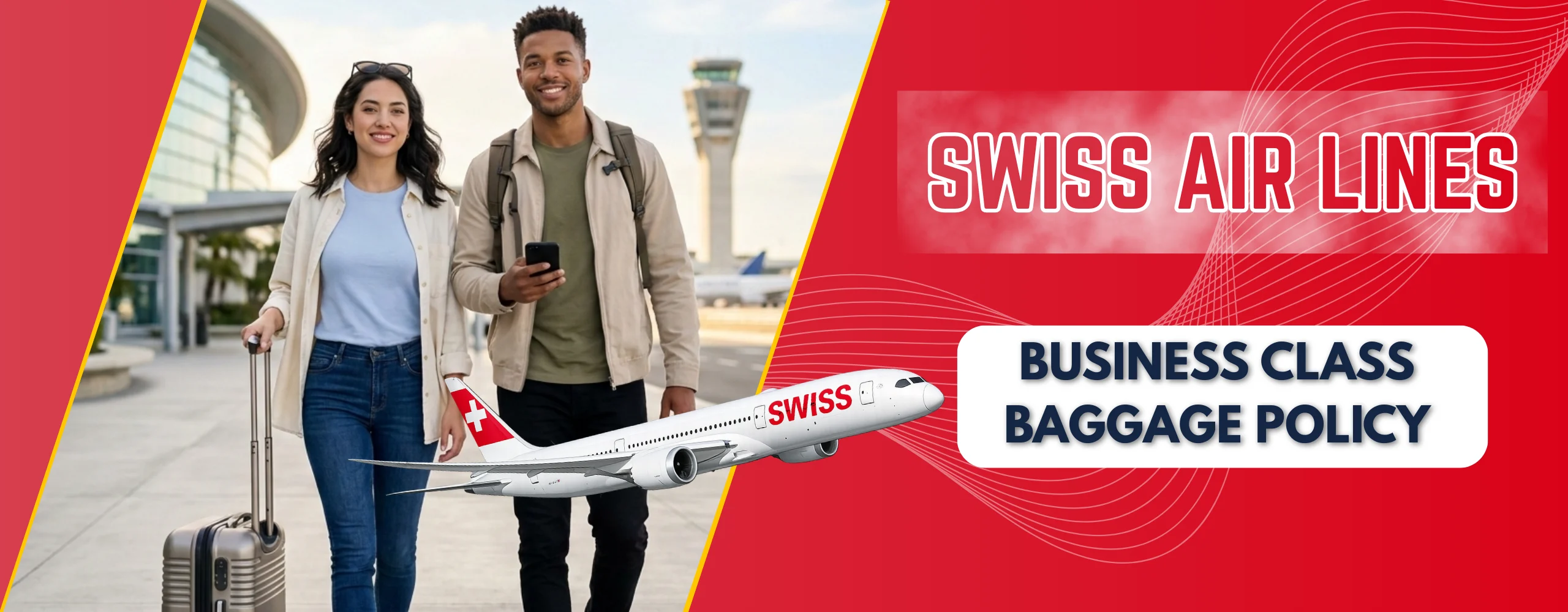
Swiss International Air Lines Business Class baggage policy primarily operates under the piece concept, meaning passengers are entitled to a fixed number of checked bags with defined weight limits per piece. In most cases, Business Class includes two checked bags up to 32 kg each, along with two carry on bags and one personal item. Size restrictions apply to both cabin and checked luggage, and overweight or oversized charges may apply if limits are exceeded. Allowance may vary between European and intercontinental routes, and fare type or elite status can influence final entitlement. The sections below break down each component in precise detail.
Under the standard Swiss International Air Lines baggage policy, Business Class passengers are generally entitled to two checked pieces, each with a maximum weight of 32 kilograms. This allowance applies under the piece concept, which means the number of bags and the weight per bag both matter.
In addition to checked baggage, Business Class typically includes two carry on bags and one personal item. Size and weight restrictions apply to cabin baggage, and gate staff may enforce limits strictly on full flights. Allowance may differ for European versus intercontinental routes and depends on the fare type purchased. Always verify your ticket conditions before departure.
Most SWISS Business Class fares include two checked bags. Each bag may weigh up to 32 kg. This is the standard SWISS 32 kg baggage rule applied across most intercontinental routes and many European services.
The allowance is defined by the airline’s published fare family rules and reflected on your e ticket. Travelers holding promotional fares should confirm that the fare still qualifies as full Business Class and not a mixed cabin segment. Additional benefits may apply for elite members of the Miles and More program. Exceeding the included number of pieces typically results in excess baggage fees.
SWISS Business Class carry on rules allow two cabin bags plus one smaller personal item. Each cabin bag must typically not exceed 8 kg in weight. Size restrictions generally follow a maximum dimension of 55 x 40 x 23 cm per bag, including wheels and handles.
The personal item, such as a handbag or laptop bag, must fit under the seat in front of you. Cabin baggage is subject to overhead bin availability and security screening standards. If your carry on exceeds limits, it may be gate checked and treated as hold baggage, which could trigger additional charges depending on your entitlement.
Overweight and oversized bags may be accepted, but they are subject to Swiss International Air Lines excess baggage fees. A checked bag exceeding 32 kg is typically not accepted due to occupational safety rules. Bags between 23 kg and 32 kg are permitted within Business Class entitlement, but exceeding 32 kg may require repacking.
Oversized bags exceeding 158 cm total linear dimensions may incur additional charges. Fees vary by zone and route. The airline enforces these limits to ensure safe loading, aircraft balance, and regulatory compliance. Advance purchase of additional baggage can reduce airport pricing.
Yes, SWISS intercontinental baggage allowance and Swiss European route baggage rules may differ slightly depending on fare structure. Long haul Business Class generally includes the full two piece entitlement of 32 kg each.
Short haul European Business Class flights also typically follow the piece concept, but certain regional or Light fare conditions may limit entitlement. Codeshare flights operated by partner airlines may apply different baggage rules under the most significant carrier principle. Always review the operating carrier’s conditions when connecting internationally.
Swiss International Air Lines, commonly known as SWISS, operates under a fare family structure within its premium cabin. Business Class fares typically include flexible ticket conditions, lounge access, and enhanced baggage allowance.
The Swiss International Air Lines Business Class baggage allowance normally includes two checked bags of up to 32 kg each, plus two cabin bags. However, fare branding such as Classic or Flex may influence rebooking conditions rather than baggage inclusion. Travelers must distinguish between cabin class and fare family. The baggage allowance attached to the ticket at purchase governs entitlement, not the marketing description alone.
SWISS applies the piece concept rather than a pure weight concept on most routes. Under the piece concept, passengers are entitled to a specific number of bags, each with a defined maximum weight.
For Business Class, this typically means two pieces at up to 32 kg per bag. Even if your total weight is below 64 kg, you cannot consolidate into one bag exceeding 32 kg. The weight limit per piece is mandatory for safety reasons. Understanding this distinction prevents repacking issues at check in and avoids Swiss Airlines excess baggage cost surprises.
Fare conditions may impact your Swiss International Air Lines luggage policy 2026 entitlement if you book discounted promotional fares, mixed cabin itineraries, or award tickets.
In mixed cabin scenarios, the most significant carrier rule usually applies for intercontinental journeys. For purely European travel, each flight segment may follow its own baggage entitlement. Award tickets booked through Miles and More generally follow the same baggage allowance as revenue tickets in the same cabin. Always confirm baggage details in your booking confirmation to avoid confusion at airport counters.
The official source for baggage conditions is the SWISS website (www.swiss.com), published under the baggage section of Swiss International Air Lines. The airline outlines piece limits, weight rules, and zone based fees in detail.
As a member of the Star Alliance, SWISS may also reference alliance wide baggage coordination principles. Travelers should rely on official documentation rather than third party summaries. For the most current details, consult swiss.com before departure, as fees and zone classifications may be updated periodically.
SWISS Business Class passengers are typically permitted two carry on bags in the aircraft cabin. This allowance reflects the premium nature of the cabin and is higher than standard Economy entitlements.
In addition to two cabin bags, one personal item is allowed. The personal item may include a handbag, slim briefcase, or laptop bag. All items must pass security screening and comply with international aviation security regulations. On high load factor flights, cabin crew may request voluntary gate checking of larger cabin bags to preserve overhead bin space.
Each cabin bag must comply with Swiss International Air Lines cabin baggage size requirements. Measurements include wheels, handles, and external pockets. The typical maximum size is 55 x 40 x 23 cm.
These dimensions ensure that the bag fits in standard overhead compartments across SWISS narrow body and wide body aircraft. Compliance is measured using airport sizing frames. Bags exceeding these dimensions may be tagged for hold carriage. Adhering to these limits minimizes boarding delays and reduces the risk of last minute gate checks.
The standard SWISS cabin bag size in cm is 55 x 40 x 23 cm. In inches, this translates approximately to 21.6 x 15.7 x 9 inches.
This measurement framework aligns with many European carriers under the Lufthansa Group. The size rule applies per cabin bag, not combined. Travelers should verify that expandable luggage remains within limits when fully packed. Oversized cabin items may be transferred to the cargo hold, where standard checked baggage rules then apply.
The personal item must fit under the seat in front of you. While exact dimensions are not always rigidly published, the item should be compact and easily stowed.
Examples include a handbag, laptop sleeve, or small backpack. Larger cabin suitcases do not qualify as personal items. SWISS enforces this distinction during boarding. Carrying multiple large cabin items may lead to enforced gate checking, especially on European short haul flights with limited overhead capacity.
Each carry on bag in Business Class typically must not exceed 8 kg. This weight limit applies per bag, not combined.
Even though Business Class provides additional checked baggage allowance, cabin bag weight remains regulated. Airport staff may conduct random weight checks. If a cabin bag exceeds 8 kg, you may be required to transfer items to checked luggage. Adhering to cabin weight limits prevents delays and ensures compliance with onboard safety protocols.
Cabin baggage must be stored either in overhead bins or under the seat in front of you. Exit rows and bulkhead seats may have additional restrictions during taxi, takeoff, and landing.
Crew instructions override passenger preference in storage placement. Larger cabin bags should be placed wheels first into overhead compartments to maximize space efficiency. Items such as coats and smaller accessories should not obstruct aisles. Proper storage supports safe evacuation procedures and regulatory compliance across SWISS aircraft types.
Security regulations restrict liquids, sharp objects, and hazardous materials in carry on baggage. Liquids must comply with international 100 ml container rules within transparent resealable bags when departing from most airports.
Lithium batteries, power banks, and electronic devices must remain in the cabin rather than checked luggage. Prohibited items are defined by international aviation authorities and airport security agencies. Non compliant items may be confiscated. Review airport specific guidance in addition to SWISS baggage policy before travel.
If your carry on exceeds permitted dimensions or weight, staff may tag it for gate check. This means the bag will travel in the aircraft hold and be returned either at baggage claim or aircraft door depending on airport infrastructure.
Gate checked items count toward your checked baggage allowance. If you already exceed your entitlement, excess baggage charges may apply. Labeling your bag clearly reduces the risk of misrouting. Travelers should remove valuables and essential documents before surrendering cabin baggage at the gate.
The Swiss International Air Lines Business Class baggage allowance is primarily structured around route category and cabin entitlement. Under the standard piece concept, Business Class passengers are generally entitled to two checked bags, each with a maximum weight of 32 kg.
This allowance applies across most SWISS operated flights, including both European and intercontinental routes. However, certain promotional fares, mixed cabin itineraries, or codeshare segments may modify entitlement. The baggage allowance displayed on the electronic ticket receipt governs the contract of carriage. Passengers should always verify route based conditions before departure to avoid operational discrepancies at airport check in counters.
On short haul European routes, including flights within the Schengen Area, SWISS Business Class typically includes two checked bags up to 32 kg each. This applies to routes operated directly by SWISS aircraft.
For long haul intercontinental routes, SWISS Business Class consistently follows the two piece allowance of 32 kg per bag. This structure supports premium travelers carrying heavier luggage for extended stays.
Each checked bag in Business Class may weigh up to 32 kilograms. This is the maximum allowed under SWISS 32 kg baggage rule due to occupational health and safety standards governing ground handling.
SWISS checked baggage must not exceed 158 cm in total linear dimensions. This measurement includes length, width, and height combined.
When itineraries include connecting flights, baggage rules depend on operating carrier logic. Under international standards, the most significant carrier rule often applies to intercontinental journeys.
Infants without their own seat typically receive limited baggage allowance. SWISS often permits one checked item such as a collapsible stroller or car seat in addition to the adult’s entitlement.
Under SWISS policy, overweight baggage refers to any bag exceeding the standard weight allowance per piece. In Business Class, this means exceeding 32 kg per bag is not permitted.
Swiss International Air Lines excess baggage fees are generally calculated by travel zone. Zones may include Europe, intercontinental destinations, and special markets.
Bags exceeding 32 kg are normally not accepted as checked baggage due to ground staff safety regulations.
Excess baggage can typically be paid online, via call center, or at the airport.
Excess fees are commonly triggered in practical situations such as extended international travel with heavy clothing, transporting gifts, or carrying large sporting equipment.
On short haul European routes, SWISS Business Class maintains the two piece concept with 32 kg per bag in most cases.
Long haul routes provide the most consistent implementation of full Business Class baggage entitlement.
Stopovers exceeding 24 hours may cause baggage rules to reset depending on ticket structure.
Codeshare arrangements may display a SWISS flight number while being operated by another airline.
SWISS offers the option to purchase additional baggage in advance through its official booking management system.
Additional baggage may also be purchased at the airport during check in.
SWISS periodically offers discounted prepaid baggage rates when purchased online.
Frequent flyer status may add complimentary baggage pieces.
Refunds for unused prepaid baggage depend on fare rules and operational circumstances.
Members of the Miles and More program may receive additional baggage benefits beyond the standard Swiss International Air Lines Business Class baggage allowance.
Elite status often grants at least one additional checked piece or increased weight flexibility, depending on tier. These benefits apply when traveling on SWISS operated flights and ticketed under qualifying fare classes. Status must be correctly attached to the reservation before check in to ensure recognition at airport counters.
Higher tier members such as Senators and HON Circle members typically receive enhanced baggage privileges. These may include additional checked pieces beyond standard Business Class entitlement.
Benefits apply across eligible flights operated by SWISS and other participating carriers within the Lufthansa Group. However, route specific limitations may still apply for safety or aircraft type reasons. Members should ensure their frequent flyer number is correctly recorded in the booking to activate benefits automatically.
Passengers holding Star Alliance Gold status through another member airline may receive additional baggage privileges when flying on SWISS operated flights.
These benefits align with alliance wide reciprocity agreements under Star Alliance. However, exact additional allowance may depend on the marketing and operating carrier combination. Confirm your status recognition before departure to avoid disputes at check in.
Elite status typically supplements rather than replaces Business Class baggage entitlement. For example, if Business Class includes two pieces, elite status may add one extra piece.
The system calculates cumulative entitlement at check in. However, per piece weight limits of 32 kg remain non negotiable. Elite status does not override safety regulations regarding maximum weight per bag. Travelers should still respect dimension limits to avoid oversized baggage charges.
To claim elite baggage benefits, passengers must have their frequent flyer number correctly attached to the reservation. Physical cards are rarely required if status appears in the system.
If discrepancies occur, presenting a digital membership card through the airline app may assist airport staff. Ensuring status validation before arrival at the airport reduces processing delays and prevents incorrect excess baggage charges.
Sports equipment such as skis, golf bags, and diving gear may be accepted as checked baggage under specific conditions. In many cases, such items count as one piece within the standard allowance if within weight and size limits.
If equipment exceeds 158 cm in total dimensions or special handling is required, additional fees may apply. Advance notification is often recommended. The SWISS sports equipment policy outlines route specific exceptions and seasonal surcharges.
Small musical instruments may be carried in the cabin if they fit within standard carry on dimensions. Larger instruments may require a purchased extra seat or checked transport.
When checking instruments, protective hard cases are strongly advised. Weight and size limits still apply. Delicate items should be declared during check in to ensure appropriate handling. Liability coverage follows standard baggage rules unless special arrangements are made.
Medical equipment and mobility aids are typically transported free of charge in addition to standard baggage allowance, subject to prior notification.
Wheelchairs and assistive devices receive priority handling. Battery powered mobility aids must comply with aviation safety regulations regarding battery type and packaging. Travelers should contact SWISS in advance to coordinate transport requirements and documentation.
Duty free purchases made after security screening are generally permitted in addition to standard cabin baggage allowance. However, they must fit within available cabin space.
On connecting flights, especially international transfers, liquid restrictions may reapply depending on airport security rules. Travelers should retain receipts and sealed packaging to facilitate transit screening.
Smart bags containing integrated lithium batteries are permitted only if the battery is removable. Non removable batteries may render the bag unacceptable for carriage.
Lithium batteries must remain in the cabin when possible. Power banks are prohibited in checked baggage due to fire risk. Compliance with international aviation safety standards is mandatory. Always review updated battery transport rules prior to departure.
If baggage does not arrive at your destination, report the issue immediately at the airport baggage service desk. A Property Irregularity Report will be generated.
Provide your baggage tag receipt and contact information. Most delayed baggage is located within several days. Compensation for essential purchases may be available subject to policy guidelines.
Damaged baggage must be reported before leaving the airport or within a specified timeframe depending on destination. Documentation is required for assessment.
Lost baggage claims require submission of detailed inventory forms. Compensation follows international conventions and airline specific conditions. Maintaining receipts and photographs supports claim evaluation.
A Property Irregularity Report is the formal document used to track missing or damaged baggage. It must be completed at the airport or shortly after arrival.
The report generates a reference number used for follow up. Failure to file promptly may limit eligibility for compensation. This process aligns with international baggage handling standards.
Under international conventions, claims for damaged baggage must typically be filed within seven days of receipt. Claims for delayed baggage often require notification within 21 days.
These time limits are defined by international treaties such as the Montreal Convention. Adhering to deadlines preserves your right to compensation.
Compensation for lost or damaged baggage is governed by international agreements, including the Montreal Convention. Liability limits are expressed in Special Drawing Rights rather than fixed currency amounts.
The framework defines maximum compensation thresholds unless higher value declarations were made in advance. Understanding this legal structure clarifies expectations regarding reimbursement.
If a baggage dispute remains unresolved, passengers may escalate through SWISS customer relations channels. Contact details are available via the official website of Swiss International Air Lines.
Written documentation and case reference numbers should accompany escalation requests. Maintaining clear records supports efficient resolution.
SWISS provides a baggage calculator tool on its official website. This tool allows passengers to input route and fare details to confirm allowance.
The calculator reflects current zone based rules and special fare conditions. Using it shortly before departure ensures alignment with updated policies.
Your e ticket receipt lists the included baggage allowance per passenger. This is the contractual reference point for entitlement.
Review the baggage line item carefully, especially on complex itineraries. If discrepancies appear, contact customer service before travel.
For complex itineraries involving multiple carriers, contacting SWISS customer service may provide clarification. Provide ticket number and route details for accurate guidance.
Early clarification reduces airport disputes and unexpected charges.
Airline baggage policies may evolve due to regulatory or operational changes. Monitoring official updates before departure is advisable.
Consult swiss.com or trusted travel authorities for the latest published rules. Avoid relying on outdated third party summaries.
A frequent misunderstanding involves assuming unlimited weight in Business Class. In reality, the 32 kg per piece rule remains firm.
Another confusion arises from combining multiple passengers’ allowance into a single overweight bag. Each piece must comply individually. Clarifying these points avoids repacking stress at the airport.
Excess baggage fees can be substantial depending on route and zone. Airport rates are often higher than online prepaid rates.
Misjudging dimensions may also trigger oversized surcharges even if weight is compliant. Using accurate measuring tools at home can prevent unexpected charges.
Weigh and measure bags before departure. Distribute weight evenly across permitted pieces. Purchase additional baggage online if required.
Attach frequent flyer status to your reservation early. Review the official Swiss International Air Lines baggage policy prior to departure to confirm current conditions.
For the most up to date and route specific information, consult the official website of Swiss International Air Lines before travel. Reviewing your fare conditions in advance can prevent unnecessary fees and airport delays.
If you are planning premium travel, consider also reading guides on efficient packing strategies and understanding international baggage liability rules. Clear preparation ensures a smoother Business Class experience from check in to arrival.
Swiss International Air Lines Business Class Baggage Policy is structured around the IATA piece concept and reflects Swiss precision in premium travel. On most European routes, passengers typically receive two checked baggage pieces up to 32 kg each, while intercontinental sectors may include the same or higher flexibility depending on fare type. The SWISS Business Class baggage allowance also covers generous carry on baggage and a defined personal item policy suited for corporate travelers. However, limits may vary by destination, promotional fare, Miles and More status, or where another carrier markets or operates the flight under IATA’s first marketing carrier rule. Reviewing the official guidance at Swiss International Air Lines helps avoid unexpected airport charges.
Overweight or oversized items above 32 kg usually require prior approval and may trigger SWISS excess baggage fees based on route and zone. Sports equipment, musical instruments, and pets are accepted subject to space, aircraft type, and handling rules. These SWISS business class baggage rules are particularly valuable for frequent European and long haul travelers within the Lufthansa Group network and across the Star Alliance system.
Understanding these details supports efficient packing for both short haul European trips and intercontinental journeys. For complex itineraries or partner operated flights, Ticket Business Class can assist at +1-877-243-8320, helping travelers plan confidently in line with official Swiss International Air Lines baggage policy standards.
Swiss International Air Lines Business Class passengers are permitted to check two pieces of baggage. This standard allowance applies to both European and intercontinental flights. For specific fare conditions, you may contact Ticket Business Class at +1-877-243-8320 for booking assistance.
Each checked bag in Swiss International Air Lines Business Class can weigh up to 32 kilograms (70 pounds). This per-piece allowance ensures you have ample capacity for your travel essentials without incurring additional fees on standard fares.
The allowance is calculated per piece, not as a total combined weight. Swiss International Air Lines Business Class allows two individual bags, each with a maximum weight of 32 kg. Packing must ensure neither bag exceeds this individual limit.
For Swiss International Air Lines Business Class, the total linear dimensions of each checked bag—length plus width plus height—must not exceed 158 centimeters (62 inches). This standard measurement helps ensure your luggage fits safely within aircraft cargo holds.
Swiss International Air Lines Business Class includes a generous hand baggage allowance of two pieces. This allows you to keep essential items close at hand, typically including a suitcase and a personal item like a laptop bag or handbag.
For Swiss International Air Lines Business Class, each carry-on item must not exceed 55 x 40 x 23 centimeters. Additionally, each piece must weigh a maximum of 8 kilograms to ensure it can be safely stowed in the cabin overhead lockers.
Yes, sports equipment like golf clubs or skis are considered part of your free baggage allowance. In Swiss International Air Lines Business Class, they are transported without additional charge as long as the total weight and number of items stay within your two-bag limit.
If your instrument exceeds standard cabin dimensions, you must book an extra seat. For assistance with this special request on Swiss International Air Lines Business Class, you may contact our team at Ticket Business Class, an independent agency, at +1-877-243-8320 for fare inquiries.
Checking a third bag on Swiss International Air Lines Business Class incurs a fee per flight leg. Costs vary by route, but pre-paying for excess baggage online through the airline’s portal is generally more economical than paying at the airport counter.
No, Swiss International Air Lines Business Class cannot accept any single item exceeding 32 kilograms due to strict health and safety regulations for baggage handlers. If your bag is overweight, you will need to repack the contents into a separate suitcase.
Yes, ski equipment is welcome on board as part of your checked baggage. As long as the total weight of your skis and your other bag does not exceed the two-piece, 32 kg per bag limit for Swiss International Air Lines Business Class, it is included free of charge.
Yes, to guarantee space in the cabin, Swiss International Air Lines Business Class enforces strict dimensions. Each of your two cabin bags must fit within 55 x 40 x 23 cm and weigh no more than 8 kg to ensure a smooth boarding process.
If a checked bag exceeds the 158 cm dimension limit or the 32 kg weight limit, it is considered oversized or overweight. For Swiss International Air Lines Business Class, this may incur significant fees or require repacking to meet safety regulations.
Absolutely. In addition to your two carry-on bags, Swiss International Air Lines Business Class allows a small personal item such as a handbag, laptop case, or briefcase. This item should fit comfortably under the seat in front of you.
No, the baggage allowance for Swiss International Air Lines Business Class is individual and per passenger. Weight limits apply to each passenger's own luggage. You cannot combine allowances to create one heavier bag for a single traveler.
If your baggage does not arrive, you must report it immediately at the airport's tracing office. For Swiss International Air Lines Business Class, obtain a Property Irregularity Report (PIR) reference number before leaving the arrivals area to start the tracking process.
Once you have filed a report, you can track your baggage status online. Using the reference number (PIR) provided at the airport, you can monitor the location of your Swiss International Air Lines Business Class luggage through the official tracking portal.
Damage must be reported within seven days of receiving your baggage. For Swiss International Air Lines Business Class, you can submit a claim online through the airline's customer relations portal. Providing photos of the damage will help expedite the review process.
Airlines are liable for baggage while in their custody. For confirmed damage to bags checked in Swiss International Air Lines Business Class, compensation may be offered for repairs or reimbursement of the bag's current depreciated value, based on the assessment.
As an independent travel agency, Ticket Business Class can assist with initial booking and fare inquiries at +1-877-243-8320. However, for specific operational issues like baggage claims, you must liaise directly with Swiss International Air Lines, as we are a third-party agency not affiliated with the carrier.
 Expert Travel Assistance
Instant Booking Confirmation
Flexible 24-Hour Cancellation
Book Now, Pay Later Options
Exclusive Business Class Deals
Turkish Airlines Business Class Baggage Policy allows two checked bags and one carry-on. Review weight limits and fees to travel comfortably and avoid extra charges.
Read More
United Airlines Polaris Business Class Baggage Policy lets you bring two checked bags and one carry-on. Check weight limits and fees for a smooth, stress-free journey.
Read More
Virgin Atlantic Business Class (Upper Class) Baggage Policy allows two checked bags and one carry-on. Review weight limits and fees to ensure smooth, hassle-free travel.
Read More